I was sad to say goodbye to Santiago and the lovely people I had met, but I was ready to dust off my backpack (literally: it had been under my bed - the house cleaner, being 80 something, couldn't get down there) and get on the road again. To Pucón , south Chile.
If you've not looked at a map lately, Chile follows the spine of the Andes and so you're guaranteed to be dazzled by mountains wherever you go, especially in The Lakes District, where Pucón lies. Something we didn't bargain for was the dozens of restaurants, coffee-houses and tour agencies competing for our attention. Pucón has been compared to Queenstown in New Zealand, and it's true that it is similar in some ways - lakeside, upmarket and an absolute magnet for families and adrenaline addicts alike.
What Queenstown doesn't have is a 3,000 metre, active volcano looming over it: an ever-smoking, ever-threatening reminder that here, despite the fancy shops, designer sunglasses, flash cars and expensive restaurants, Earth is in charge.

Volcán Villarrica, a perfect snow-capped cone which wedges Pucón against the lake of the same name, is why we were here. But the weather had other ideas. From the forecast for the next week it seemed that the Southern Hemisphere summer was drawing to an end rather quickly - and climbing the volcano in cloudy or windy weather is not an option.
So, we lay in wait, amusing ourselves with one-day treks in Parque Nacional Huerquehue, lazy afternoons in the natural aquas termales (hot springs) and meeting up with Christian, from Ecuador, who we met on the bus from Santiago (he had a gorgeous house with a swimming pool and took us to visit the waterfalls in his 4WD).
Just when we were tittering on the edge of booking our bus to Argentina, we heard a rumour that the weather forecast was looking up. Easter Sunday appeared to be perfect volcano-climbing weather, as well as perfect chocolate-scoffing temperature. We decided to wait it out. It was now or never; we had been in Pucon for five days and needed to move on.
The night before, we picked up our equipment bags for the climb: heavy mountain boots, gloves, helmet, ice axe (yikes, ice axe! Are we really going to need an ice axe?), jacket, over-trousers, a funny, wrap-around miniskirt with buckles and an piece of equipment resembling an oversized, plastic frying pan, which unlike most in our group, I had encountered before. The climb was on, at long last.
5am is a time I don't even see in my working life, but in my quest for adventure it's a part of the day I'm willing to witness. It was 6am when we gathered by the trucks and, after much throwing around of equipment, we were on the road to the foot of Volcan Villarrica.
The sun was spilling over the snow-capped peaks in the distance as we started our ascent, minus the help of the skiing chair lift (yes, people ski on South America's second most active volcano) to cut off 1.5 hours of the climb as it was Easter Sunday. The peak, with its white icing, loomed high above our heads as beads of sweat started to burst onto our foreheads. And it was only 7am.

The steep, steep climb, first over loose volcanic rock and then icy snow, seems quite surreal at times. We passed the twisted remnants of a pulverised chairlift, an unsettling reminder of the monstrous force of this gurgling vent in the Earth's crust. First struck down by the last eruption, in 1971, then shifted further down by the earthquake in 2010.
As we climbed higher, single file,we took breaks to catch our breath and simultaneously let the view steal it off us once again. The vista of mountains, lakes and other volcanoes in the background was just as breathtaking as the leg-burning hike upwards.
We stopped for lunch (at 10.30am - seems normal when you day started at 5am) and our guides fixed the rusting crampons to our boots. Never before had I walked with a pair of crampons, but they were essential as we hit the snow and ice, that was glistening in the reddening sun.

The ice axe turned out to be mainly a balancing tool for the trickier parts. Every once in a while a loud whistle or the sound of dozens of people shouting "piedraaaaa!!!" rings out: rocks, some small and some not-so-small, roll down the volcano with leg-breaking speed. We were quite happy to have overtaken the other groups and be the first on the volcano in many days.
We traversed across crevasses and narrow ridges of pure ice, gripping onto the safety rope our guides had fixed. As the ice and snow melted in the midday sun, people slipped and fell, using their ice picks to steady themselves. The last part of the climb was the toughest, both old lava and snow giving way beneath our feet. It was our own mini-Everest.

Within five hours we reached the volcano's summit, where a broad, deep crater lined with vivid yellow sulphur deposits belches a continuous stream of acrid gases. An almost constant, deep rumble emanates from within the volcano's bowels.
To top it off, Villarrica is one of very few volcanoes in the world to have a permanent liquid lava lake within its crater. The level of the lake is variable, and while it's not easy to see at the moment, due to its low level and the quantity of smoke obscuring the crater's depths, we did get to glimpse bright, incandescent patches on the surface of the lake as the lava is churned within.

A comedian in our group threw a rock into the crater, followed minutes later but an angry spewing of billowing red smoke.We all moved back from the edge, stealing nervous looks at our two guides who cast worried glances at each other, and then grinned.

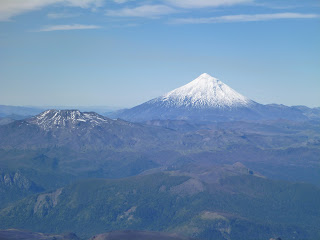
When we thought it couldn't get any better, we headed to the other side of the 2,847 metre high crater for a 360-degree view of the volcano-studded region straddling the Chile-Argentina border. To the east, another perfect volcanic cone is visible: Volcán Lanín, significantly taller at 3,747m. Other volcanic peaks - Quetrupillán, Llaima - and azure lakes - Villarrica, Calafquén - are visible all around.

After admiring the gorgeous panorama and sharing some chocolate Easter eggs, it was time to make our descent. How do you get down a volcano? Not the way we had imagined, that's for sure! We kitted up in the thick, plastic miniskirt and clipped the flimsy, plastic frying pan between our legs. We weren't going to climb down Villarrica, we were going to slide down it.
I had used a "bum board" before on skiing holidays, but not on such steep, rocky terrain, and certainly not to slide down an active volcano. As we were the first to bomb down in nearly a week, we had to refind, and sometimes remake, the deep channels in the snow and ice have been carved out by other climbers. This made it even more of an adventure.
It's not often in life you get to behave like a kid, wind in your hair, heart pumping with adrenalin, screaming "wheeeeeeeeeeeeeee" all the way to the bottom!

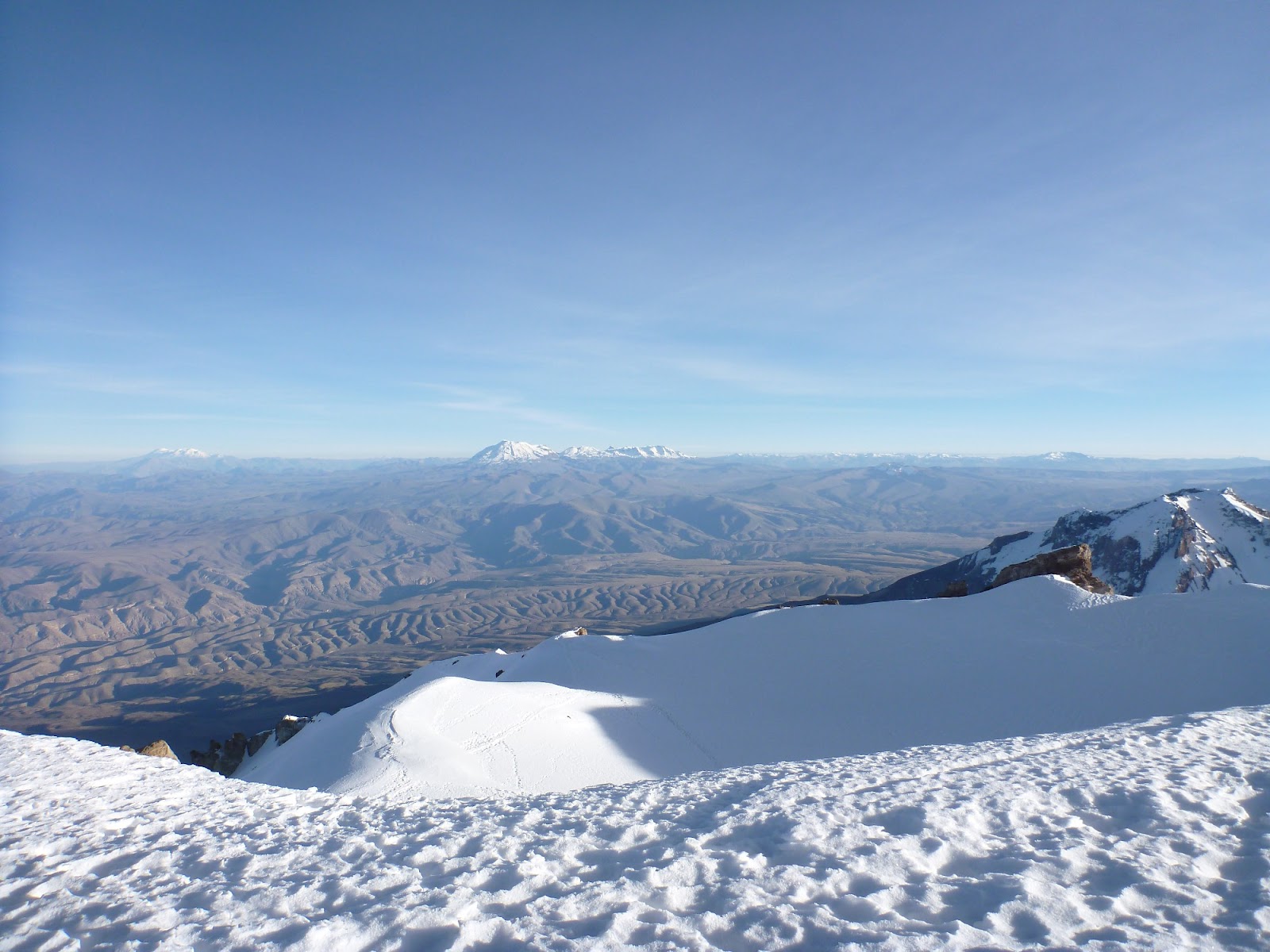
 We went to the tour agency to meet our fellow trekkers, Alex and Nick from Switzerland, and to get kitted up in retro snow and ice gear that was last in fashion in the 80s - because that was when it was made. We were hoping to summit Volcan Chachani - a very serious 6075m.
 You need to be armed with an ice pick but you don't necessarily need to know how to use it.




.jpg)